What Is the Best Clean Energy Technology from China?
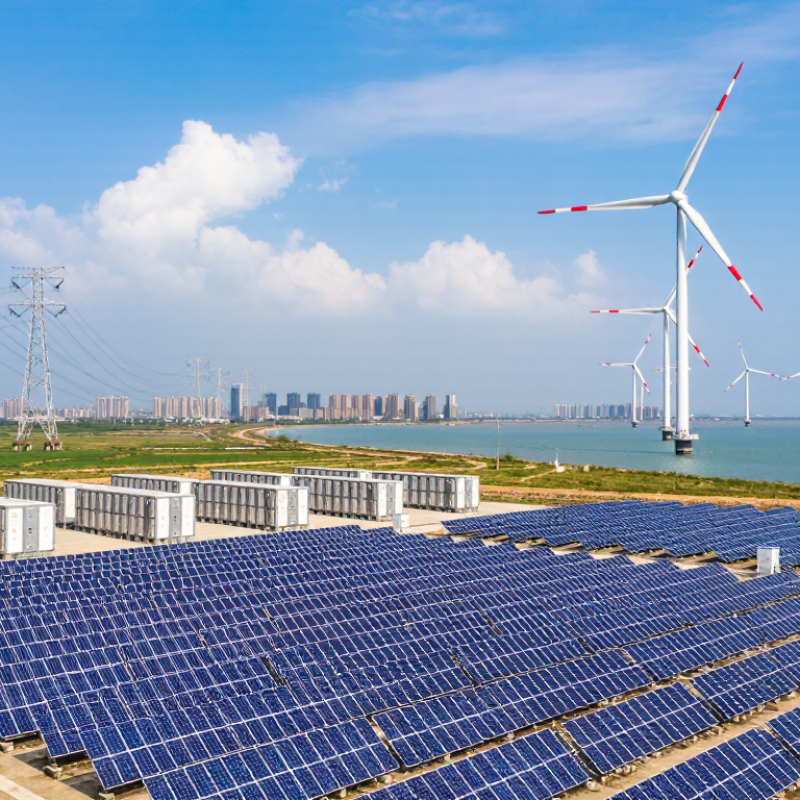
China has become a major testing ground for clean energy technology. Its vast solar farms, offshore wind projects, electric vehicles, batteries, and ultra-high-voltage transmission lines operate at remarkable scale. Yet scale alone does not prove that one solution is best. The right choice depends on cost, land, weather, grid access, resource use, and local energy demand.
Solar photovoltaics may be the strongest overall candidate for many regions. China has built extensive manufacturing capacity, reduced equipment costs, and deployed panels across rooftops, deserts, factories, and floating reservoirs. A rooftop system can turn unused space into electricity during daylight hours. However, solar output falls at night and during heavy clouds. That limitation makes storage and flexible grids essential.
Batteries offer a practical response, especially where renewable power changes quickly. Chinese manufacturers have developed large lithium iron phosphate systems and other storage technologies for vehicles and stationary projects. Wind power remains valuable, particularly along coastal areas and northern plains. Hydropower can provide stable generation, but dams may affect ecosystems and communities. These trade-offs deserve careful attention.
There is no flawless answer. My assessment may also change as prices, recycling methods, and grid policies develop. A reliable comparison should examine full-life emissions, safety records, maintenance needs, mineral supply chains, and performance in real operating conditions. The best clean energy technology from China is therefore not necessarily one machine or industry. It is likely a balanced combination of solar, wind, storage, efficient grids, and transparent environmental oversight. Scale matters. Context matters more.
Defining Clean Energy Technology in the Chinese Context
What Is the Best Clean Energy Technology from China?
Defining Clean Energy Technology in the Chinese Context
In China, “clean energy technology” means more than producing electricity without smoke. It includes equipment, materials, storage systems, transmission networks, and methods that reduce emissions across their life cycles. A solar panel may generate clean power, yet its full impact depends on mineral extraction, factory energy use, transport, recycling, and land management.
Context changes the answer. China has strong sunlight in western regions, but major cities and factories often sit far away. High-voltage transmission can move renewable electricity across long distances. Energy storage can balance cloudy hours and evening demand. In cold northern areas, electric heat pumps may cut coal use, especially in well-insulated buildings. Coastal provinces may gain more from offshore wind, although maintenance conditions are demanding.
The best technology is not always the newest one. It is the option that performs reliably in its actual setting. A project should be tested through emissions data, water use, grid stability, local employment, and end-of-life recycling. Independent monitoring matters because advertised efficiency can differ from field performance. Small communities also need a voice.
Some judgments remain imperfect. Lifecycle data is not equally transparent across all suppliers. Recycling capacity is developing, not complete. Still, combining renewable generation, efficient grids, storage, and careful demand management offers a more credible Chinese definition of clean energy than choosing one universal winner.
What Is the Best Clean Energy Technology from China? - Defining Clean Energy Technology in the Chinese Context
Comparative assessment of major clean electricity technologies according to China’s resource conditions, grid needs, scalability, environmental performance, and system value.
| Technology | China Installed Capacity (End of 2023) |
Typical Lifecycle Emissions (g CO₂e/kWh) |
Typical Capacity Factor | Dispatchability | China-Specific Strengths | Main Constraints | Overall Strategic Role |
|---|---|---|---|---|---|---|---|
| Solar Photovoltaic | 609.49 GW | Approximately 20–50 | About 12–24%, depending on location and system design | Excellent solar resources in northern and northwestern regions; fast construction; modular deployment; suitable for utility-scale projects, rooftops, and distributed generation. | Output varies by daylight and weather; transmission congestion and curtailment can occur in remote resource-rich areas; requires storage, flexible generation, or demand response for evening demand. | ||
| Wind Power | 441.34 GW | Approximately 8–20 | About 20–35% onshore; approximately 35–50% offshore in favorable sites | Strong wind resources across northern inland regions and coastal areas; complements solar because wind output can be higher during nighttime and winter periods. | Resource bases are often far from eastern and southern load centers; weather-dependent output requires transmission expansion, forecasting, storage, and flexible grid operation. | ||
| Hydropower | 421.54 GW | Approximately 4–30 for many projects, with wider project-specific variation | About 30–50%, depending on hydrology and reservoir design | Provides renewable electricity, balancing capacity, peaking capability, and in some cases long-duration storage; particularly valuable in southwest China. | Limited remaining sites with favorable economics; ecological impacts, resettlement, sedimentation, drought risk, and long-distance transmission requirements must be managed. | ||
| Nuclear Power | 56.91 GW | Approximately 5–25 | About 80–95% | Provides stable, low-carbon baseload electricity with a small land footprint and high annual utilization; suitable for densely populated coastal load centers. | High upfront capital requirements, long construction periods, complex safety regulation, radioactive-waste management, and dependence on suitable coastal or water resources. | ||
| Biomass Power | 43.18 GW | Approximately 20–230, depending on feedstock and accounting method | About 60–85% for plants with reliable fuel supply | Can use agricultural residues, forestry residues, organic waste, and landfill gas; supports waste management and can provide local dispatchable generation. | Sustainable feedstock is limited; collection and transport costs can be high; air-pollution controls and lifecycle carbon accounting are important. | ||
| Geothermal Energy | Not reported as a major national power-generation category | Approximately 10–50 for electricity projects | About 70–90% where high-quality resources are available | Stable output and strong potential for direct heating in northern cities and selected sedimentary-basin regions; can reduce coal use in district heating. | High-quality electricity resources are geographically limited; drilling risk, reinjection requirements, induced seismicity, and mineral scaling require careful management. | ||
| Battery Energy Storage | Not included as generation capacity | Not an electricity-generation technology; emissions depend on manufacturing, charging source, and operating life | Typically designed for approximately 1–4 hours of discharge | Helps integrate rapidly growing solar and wind capacity; provides frequency regulation, ramping support, peak shifting, and congestion management. | Storage duration, degradation, safety, raw-material supply, recycling, and project economics remain important considerations; batteries do not create primary energy. |
Data notes: Installed-capacity figures refer to China’s national totals at the end of 2023 and are based on publicly reported national energy statistics. Lifecycle-emission ranges are indicative values synthesized from international lifecycle-assessment literature, including IPCC assessment findings; actual results vary with construction methods, resource quality, operating conditions, supply chains, and project location.
Related Posts
-
What Is the Best Renewable Power Technology in China?
-
Top 10 Future of Renewable Energy Trends for Global Buyers
-
2026 Best Future Energy Systems for Global Buyers
-
What is Modern Energy Solutions for Global Buyers?
-
Top 10 Green Energy Trends Shaping the Future Today?
-
What is Clean Energy Technology and How Can It Benefit You?
Talk to a solar expert
Fill out the form and our team will be in touch with a free quote based on your local incentives and payment options.