Skip to content

2026 Best Future Energy Systems for Global Buyers

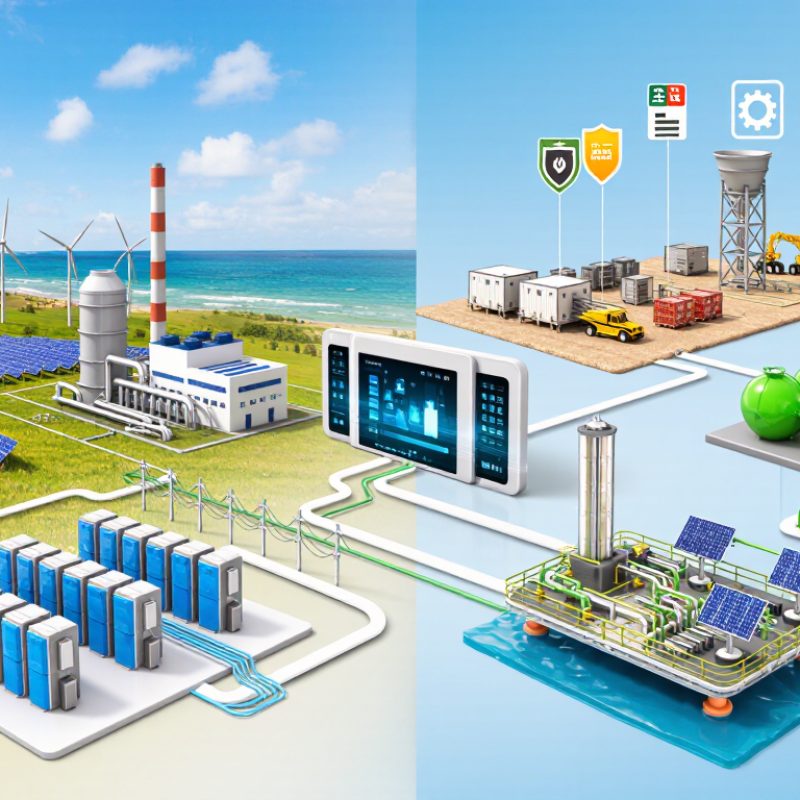
The 2026 market will not reward impressive promises alone. Global buyers need energy systems that perform under real operating conditions, changing regulations, and uneven grid quality. This guide examines future energy systems through measurable value, not marketing language. It considers solar and wind generation, battery storage, smart grids, green hydrogen, and hybrid industrial platforms.

A reliable system should match local resources, demand patterns, land limits, and maintenance capabilities. A coastal factory may need corrosion-resistant equipment, while a remote mine may prioritize storage autonomy and simple repairs. Buyers should review efficiency data, warranty terms, cybersecurity controls, and total lifecycle costs. Independent testing, transparent supply chains, and compliance with recognized IEC or ISO standards can reduce procurement risks. Evidence matters.

However, no single technology fits every market. Costs change quickly. Forecasts can be wrong. Hydrogen projects may face uncertain infrastructure, while batteries may raise questions about mineral sourcing, recycling, and fire protection. These concerns deserve honest evaluation rather than optimistic assumptions. Buyers should request performance records from comparable installations, verify supplier references, and assess service coverage after commissioning. A low purchase price can become expensive when spare parts arrive slowly or software support ends early.

This introduction sets a practical framework for comparing systems in 2026. It connects technical performance with financing, resilience, environmental responsibility, and long-term usability. The strongest decision may not be the newest solution. It may be the one that remains understandable, repairable, and accountable for twenty years.
2026 Best Future Energy Systems for Global Buyers

Global Energy Demand and the Evolution of Future Energy Systems

Global energy demand is shifting from fuel consumption toward electricity consumption. The International Energy Agency projects global electricity demand will grow by nearly 4% annually through 2027. That means about 3,500 additional terawatt-hours will be needed. Data centers, cooling, electric transport, and industrial heat are major drivers.

Future energy systems will combine solar and wind generation with storage, flexible grids, and firm low-carbon power. The International Renewable Energy Agency reported 585 gigawatts of renewable capacity additions in 2024. Renewables represented 92.5% of total global power-capacity expansion. For buyers, the practical question is not simply capacity. It is whether electricity arrives reliably at the right site and hour. A containerized battery beside a substation can reduce peak stress, while digital forecasting can improve dispatch decisions.

Yet the transition remains uneven. Grid queues, transformer shortages, permitting delays, and limited minerals can slow projects. The IEA estimates that annual grid investment must rise substantially by 2030 to support clean-energy growth. Some hydrogen plans may also prove too expensive without reliable renewable power. A forecast is not a promise. Buyers should test suppliers against measured availability, lifecycle emissions, cybersecurity controls, and maintenance records. The best systems may be less glamorous: a shaded solar field, a two-hour battery, and a stronger local grid.

Core Technologies Shaping Energy Systems in 2026

In 2026, energy systems are becoming coordinated networks rather than isolated power plants. Solar and wind remain central, but their value depends on flexibility. Artificial intelligence now improves demand forecasting, weather modeling, and maintenance scheduling. A control room can compare rooftop generation, battery levels, and industrial demand within seconds. Yet prediction is not certainty. Sudden cloud cover can still disrupt carefully balanced plans.

Grid-forming inverters are shaping modern power systems. They help batteries and renewable plants support voltage and frequency during disturbances. Long-duration storage adds another layer of resilience, using thermal, mechanical, chemical, or flow-based technologies. Green hydrogen may serve heavy industry and seasonal storage where direct electrification is difficult. It is not efficient for every application. That limitation deserves more attention.

Digital twins allow engineers to test grid upgrades before construction. Sensors can reveal heat, vibration, and declining battery performance earlier than routine inspections. Cybersecurity is equally important, because connected assets create wider attack surfaces. Practical buyers should examine system interoperability, local service capacity, recycling plans, and performance under extreme weather. A low purchase price can hide expensive integration work. Field experience also shows that ambitious projects often underestimate permitting, workforce training, and transmission delays. Better systems are not always the most complicated ones. Reliability still depends on disciplined operation, transparent data, and decisions that work beyond laboratory conditions.

Renewable Power Generation and Advanced Energy Storage

In 2026, global buyers are seeking energy systems that combine renewable generation with dependable storage. Solar arrays can supply daytime electricity, while wind turbines may strengthen output during evening hours. A battery system then shifts surplus power into expensive demand periods. This design reduces grid dependence without requiring one technology to carry every load.

A practical project begins with local weather and consumption data. A factory using 5 megawatt-hours daily needs more than a large battery nameplate. Engineers should examine discharge duration, temperature effects, fire protection, and replacement planning. Lithium iron phosphate batteries offer strong cycle performance, but they still require careful thermal monitoring. Independent performance tests can verify capacity, round-trip efficiency, and response time. Measured output matters more than promises.

Consider a cold storage facility near a coastal grid. Solar production may fall during cloudy afternoons, while salt air can accelerate equipment corrosion. Protective enclosures and scheduled inspections become essential. Hybrid systems can also include pumped storage, thermal storage, or green hydrogen where geography supports them. These options are useful, but not universally economical. Some projects still overestimate future electricity prices. That mistake can distort the entire investment model. Buyers should request transparent degradation assumptions, service records, permitting evidence, and clear end-of-life procedures before approving a system.

2026 Best Future Energy Systems for Global Buyers - Renewable Power Generation and Advanced Energy Storage

Indicative global technical and economic ranges for utility-scale projects; actual results vary by location, financing, resource quality, grid conditions, and project design.

Energy System Primary Role Typical Commercial Scale Key Performance Indicator Indicative Cost Range Expected Service Life Best-Fit Applications Main Procurement Considerations
Utility-Scale Solar Photovoltaics Low-carbon electricity generation 10–500+ MW per project Capacity factor: approximately 15–30%; module degradation commonly around 0.2–0.5% per year Levelized cost of electricity: approximately US$25–75/MWh 25–35 years for the generation asset Daytime demand, low-cost bulk power, hybrid solar-plus-storage plants Solar resource, land availability, grid connection, module reliability, curtailment, and storage integration
Onshore Wind Power Variable renewable electricity generation 50–500+ MW per project Capacity factor: approximately 30–50% at favorable sites Levelized cost of electricity: approximately US$25–75/MWh 20–30 years Large-scale power supply, energy-intensive industry, hybrid wind-storage systems Wind quality, transport infrastructure, permitting, wake losses, grid stability, and community acceptance
Fixed-Bottom Offshore Wind High-capacity-factor renewable generation 300 MW–2+ GW per project Capacity factor: approximately 40–60% at strong offshore sites Levelized cost of electricity: approximately US$60–140/MWh 25–30 years Coastal load centers, constrained land markets, large-scale clean power procurement Water depth, seabed conditions, port capacity, marine permitting, subsea cables, and weather exposure
Hydropower with Reservoir Storage Dispatchable renewable generation and grid balancing 100 MW–10+ GW per project Capacity factor: approximately 30–60%; response time can range from seconds to minutes Levelized cost of electricity: approximately US$40–120/MWh for new projects 50–100+ years with major refurbishment Firm renewable supply, peak demand, frequency control, seasonal balancing Hydrology, environmental impact, resettlement, sedimentation, water rights, and long construction periods
Geothermal Power Firm low-carbon electricity and heat 5–200 MW per development area Capacity factor: approximately 70–95%; available around the clock where resources are suitable Levelized cost of electricity: approximately US$60–110/MWh 25–40 years for the plant, subject to reservoir management Firm power, district heating, industrial heat, remote grids Resource temperature, drilling risk, reservoir sustainability, water chemistry, and local permitting
Lithium-Ion Battery Energy Storage Short-duration shifting, peak reduction, frequency regulation, and renewable integration 10 MW–500+ MW; commonly 1–4 hours of storage Round-trip efficiency: approximately 85–95%; response time: milliseconds to seconds Installed system cost: approximately US$150–350/kWh; cost depends strongly on duration and grid scope 10–20 years, depending on cycling, temperature, and operating limits Solar and wind firming, ancillary services, microgrids, transmission deferral Thermal management, fire safety, degradation warranty, replacement planning, recycling, and supply-chain compliance
Flow Battery Storage Longer-duration daily energy shifting 1–100+ MW; commonly 4–12 hours of storage Round-trip efficiency: approximately 65–85%; energy capacity can be expanded by increasing electrolyte volume Installed system cost: approximately US$250–600/kWh for current commercial-scale configurations 15–25+ years; generally suitable for frequent cycling Renewable shifting, industrial microgrids, medium-duration grid support Electrolyte cost and availability, footprint, operating temperature, pumping systems, and bankability
Pumped-Storage Hydropower Large-scale, long-duration energy storage and system balancing 100 MW–3+ GW; commonly 8–24 hours of storage Round-trip efficiency: approximately 70–85%; response time: seconds to minutes Capital cost: approximately US$1,000–4,000/kW, highly site-dependent 50–100+ years with refurbishment Daily and weekly balancing, renewable integration, capacity adequacy Topography, water availability, geology, environmental approvals, transmission access, and construction timeline
Thermal Energy Storage Heat storage for power generation, industrial processes, and cooling 1 MWth–500+ MWth; several hours to multiple days Storage efficiency commonly 70–95%, depending on medium and application Approximately US$10–100/kWh-thermal for many sensible-heat applications 15–30+ years for tanks and associated equipment Industrial heat, district heating, concentrated solar power, chilled-water systems Temperature range, insulation losses, heat exchanger design, material compatibility, and proximity to thermal loads
Green Hydrogen with Electrolysis Long-duration energy carrier and low-carbon industrial feedstock 10–500+ MW electrolyzer capacity Electricity consumption: approximately 48–60 kWh per kg of hydrogen, excluding compression and downstream delivery Indicative production cost: approximately US$2–8/kg, depending mainly on renewable electricity cost and utilization 15–25 years for electrolyzer systems, with periodic stack replacement Fertilizer, refining, steelmaking, shipping fuels, seasonal storage, and remote energy systems Renewable electricity availability, water supply, electrolyzer utilization, compression, storage, transport, and safety standards

Notes: Capacity factor refers to annual electricity output divided by maximum possible output. LCOE and storage-cost ranges are indicative 2024–2026 international benchmarks and are not fixed quotations. Generation and storage systems are often combined to improve reliability, reduce curtailment, and provide firm clean power.

Smart Grids, Digital Control, and Energy System Integration

2026 Best Future Energy Systems for Global Buyers

Smart grids are becoming operating platforms, not only electricity networks. They connect rooftop solar, batteries, electric vehicles, and flexible industrial loads. The International Energy Agency’s Electricity 2024 report expects global electricity demand to grow by about 4% annually through 2025. That growth will pressure networks during hot afternoons and cold evenings. Buyers should examine local flexibility, cybersecurity, and outage recovery before purchasing new equipment.

Digital control gives operators faster visibility. Sensors can show a transformer heating up, while automated software can shift battery charging by minutes. These small actions matter. The IEA’s Renewables 2024 report forecasts more than 5,500 GW of new renewable capacity from 2024 to 2030. Such volume requires coordinated forecasting, dispatch, and grid balancing. A system that only adds generation may still fail at the distribution level.

Integration remains difficult. Different communication standards can delay projects and create hidden maintenance costs. In field evaluations, a clean dashboard does not always mean clean data. Buyers should request open interfaces, transparent performance tests, and human override options. Some digital models also depend on imperfect weather forecasts. That weakness deserves attention. IRENA’s World Energy Transitions Outlook 2024 indicates that renewable expansion must accelerate sharply this decade, making interoperable control increasingly important. The strongest designs will combine automation with trained operators, practical storage, and measurable resilience.

2026 Best Future Energy Systems for Global Buyers

Smart Grids, Digital Control, and Energy System Integration

Smart grids

Rising electricity demand increases the need for flexible networks, advanced metering, distributed generation, and demand response.

Digital control

Automation, forecasting, and real-time monitoring help operators balance variable renewable generation with changing loads.

System integration

Storage, interconnection, electrified transport, efficient buildings, and flexible industry must operate as one coordinated energy system.

Chart metric: global electricity demand and generation, TWh. The 2023 baseline is rounded from Ember’s Global Electricity Review 2024. The 2024–2026 values are calculated using the International Energy Agency’s Electricity 2024 outlook of approximately 4% annual global electricity-demand growth.

Global Buyer Criteria for Selecting Future Energy Systems

Global buyers need more than low equipment prices when selecting future energy systems. They should test lifetime value, grid compatibility, and resilience under local conditions. IRENA’s Renewable Capacity Statistics 2024 recorded 473 GW of renewable capacity added worldwide in 2023. That growth changes procurement priorities. Buyers now need flexible systems, not isolated generation assets.

Start with measurable performance. Request independently verified efficiency, degradation curves, response times, and safety records. Ask how the system performs during heatwaves, dust exposure, flooding, or weak-grid operation. The IEA’s Renewables 2024 report expects global renewable capacity to expand by nearly 5,500 GW between 2024 and 2030. This scale will increase demand for storage, forecasting, digital controls, and transmission readiness. A five-year warranty is not enough. Examine service coverage, spare-part access, cybersecurity controls, and documented field experience.

Costs require careful comparison. Lazard’s Levelized Cost of Energy+ report shows that generation economics vary significantly with financing, location, storage duration, and grid connection. Buyers should compare total ownership cost, not headline tariffs. Include replacement cycles, insurance, land preparation, balancing charges, and end-of-life treatment. Numbers can mislead. Forecasts may also fail when policy, interest rates, or weather patterns shift. A practical scorecard should therefore include sensitivity testing and independent technical review. It may feel slower, but rushed procurement often hides the most expensive risks.