China’s housing market is reshaping expectations for efficient, comfortable, and lower-impact living. For global buyers, the most important home sustainability trends extend beyond solar panels and recycled materials. They include smart energy controls, high-performance insulation, water-saving fixtures, low-emission finishes, and adaptable home designs.
This guide examines ten practical trends emerging across Chinese residential projects and manufacturing supply chains. Examples include balcony solar systems, heat-pump water heaters, fresh-air ventilation units, and energy-monitoring platforms that display daily consumption. These details matter. A home may look sustainable, yet perform poorly without proper installation, maintenance, and climate-specific planning. Regional differences also influence results, from humid coastal cities to colder northern provinces.
Reliable evaluation requires more than attractive product claims. Buyers should review test reports, energy labels, material certifications, warranty terms, and installation records. Independent verification remains valuable, especially when comparing suppliers or newly developed technologies. No market is perfectly green. Some products still depend on carbon-intensive manufacturing, while smart systems can become electronic waste when upgrades arrive too quickly. That limitation deserves attention.
The following overview connects China’s sustainability innovations with the practical concerns of international purchasers. It considers operating costs, indoor air quality, durability, renovation flexibility, and long-term property value. It also encourages careful questions about local standards and after-sales support. Sustainable choices should work in real homes, not only in brochures.
China Top 10 Home Sustainability Trends for Global Buyers?
Defining home sustainability in China’s residential market requires more than counting energy-saving appliances. It means examining how a home performs in daily life. During residential site visits, I look for shade, ventilation, water use, and maintenance access. A sustainable home should remain comfortable during humid summers and cold northern winters. It should also control long-term operating costs.
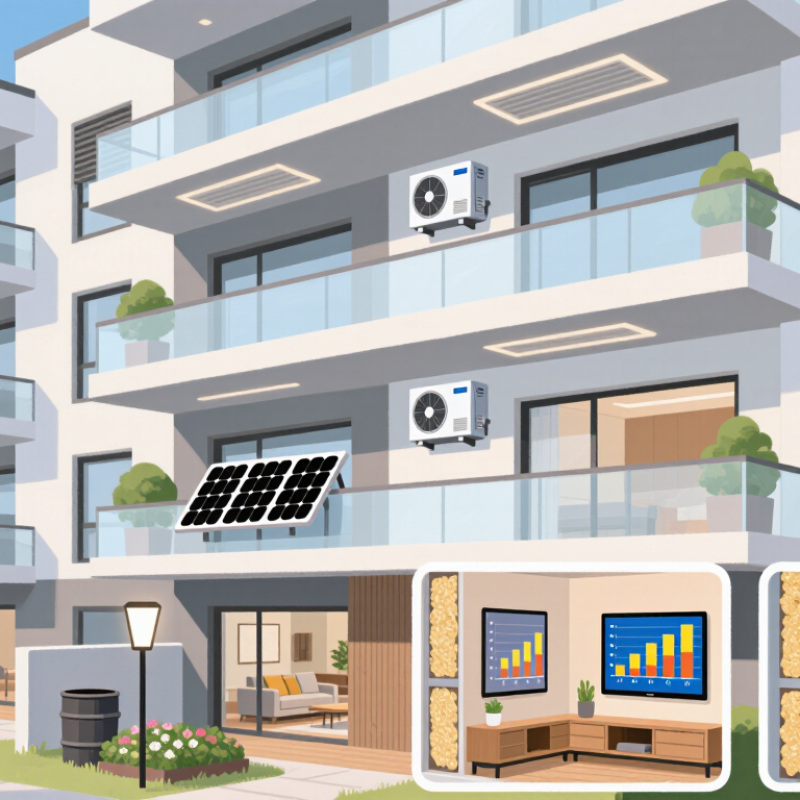
For global buyers, ten practical signals matter in Chinese homes. Passive shading reduces indoor heat. Better insulation limits seasonal energy loss. High-performance windows improve comfort near busy roads. Heat-pump systems can reduce dependence on direct electric heating. Rooftop solar supports shared building demand where conditions allow. Efficient lighting and appliances lower routine consumption. Smart meters make unusual energy use visible. Water-saving fixtures reduce pressure on urban supplies. Low-emission materials support healthier interiors. Waste sorting and electric-vehicle-ready parking reflect wider community planning.
The details are often modest. A shaded balcony can matter more than an impressive lobby. A serviceable filter is more useful than hidden technology. Buyers should request energy records, renovation specifications, and local climate data. Building management quality also affects real performance. Poor maintenance can weaken a well-designed system. This is where sustainability becomes less perfect and more practical. Some projects still prioritize appearance over repairability. Others install efficient equipment without explaining its controls. Global buyers should question these gaps, measure actual use, and avoid treating green labels as complete evidence.
Selected national indicators show how China’s residential sustainability market is being shaped by greener construction, energy transition, water services, waste management and prefabrication.
Figures are the latest nationally reported values available for the relevant indicator, with years varying from 2022 to 2023. Sources: China’s Ministry of Housing and Urban-Rural Development, National Bureau of Statistics and National Energy Administration.
China’s Top Ten Home Sustainability Trends for Global Buyers are reshaping residential design. Passive shading, better insulation, low-emission windows, heat pumps, rooftop solar, home batteries, smart energy controls, water-saving fixtures, recycled materials, and modular furniture are gaining attention. The China Building Energy Consumption Annual Report identifies buildings as a major energy-demand sector, making efficiency a practical buying priority. Globally, the International Energy Agency reports that buildings consume about 30% of final energy and create around 26% of energy-related emissions.
Chinese manufacturers increasingly provide energy labels, lifecycle information, and digital monitoring. These tools help buyers compare electricity use, repair access, and expected service life. The Global E-waste Monitor 2024 recorded 62 million tonnes of electronic waste in 2022, while only 22.3% was formally recycled. This supports a stronger preference for repairable appliances, replaceable batteries, and recyclable interiors. However, certification language is not always comparable across markets. A bamboo surface may look sustainable, yet adhesives, transport, and disposal still matter. The greener choice is sometimes less attractive.
Tips: Request verified test reports, not only marketing claims. Check insulation performance, energy labels, water efficiency, and spare-parts availability. Ask whether recycled content is independently audited. Buyers should also review regional climate conditions, because a heat pump designed for southern China may perform differently in a cold European home. Real-world installation can weaken excellent product data.
China’s home sustainability market is shifting from isolated green products to connected energy systems. The opportunity is practical: roofs, batteries, heat pumps, and intelligent controls must work together. The UNEP 2023 Global Status Report found that buildings consumed 34% of global energy and produced 37% of energy-related emissions in 2022. That pressure is reshaping buyer expectations.
Smart energy management is becoming the control layer. Sensors can track room temperature, appliance loads, and rooftop generation in real time. Automated controls then delay flexible tasks, such as water heating, until solar output is higher.
250+ GW
China’s distributed solar capacity by the end of 2023.
China’s National Energy Administration reported more than 250 gigawatts of distributed solar capacity by the end of 2023. For global buyers, this creates exportable solutions: modular batteries, low-loss inverters, heat-pump water heaters, and home energy gateways. The IEA’s Renewables 2023 report also projects strong global growth in solar and storage, supporting demand for compatible household technologies.
Small details matter. A well-insulated apartment needs a smaller heat pump. A shaded roof may need different solar planning. Not every smart device saves energy; poor settings can increase standby consumption.
That is the uncomfortable part. Buyers should request measured performance, safety testing, repair support, and clear carbon data. The IEA’s Energy Efficiency 2023 report stresses that efficiency gains depend on both technology and user behavior. A dashboard alone is not enough. Homes still need people who understand the data.
China’s home market is moving toward lower-impact, healthier interiors for global buyers. The direction is practical, not decorative.
Ten visible trends are gaining attention: bamboo, recycled glass, low-carbon cement, certified timber, water-based coatings, modular furniture, repairable fittings, recycled textiles, daylight planning, and improved ventilation. These choices can reduce waste and chemical exposure when specifications are verified. The Ellen MacArthur Foundation estimates that more than 80% of furniture materials are discarded or burned after use. Modular joinery offers a better alternative. A cabinet with replaceable doors can stay useful after a small accident.
Circular design also changes how buyers evaluate Chinese homes. Designers are using standard panels, mechanical fasteners, take-back planning, and adaptable room layouts. The Global Status Report for Buildings and Construction 2023 states that buildings produced about 37% of global energy-related emissions. Material efficiency therefore matters beside energy efficiency. Reuse is often less visible, but more valuable.
Healthier interiors need evidence. The World Health Organization links indoor air quality with respiratory and cardiovascular risks. Buyers should request formal emission tests for paints, adhesives, flooring, and composite boards. Fresh air must reach bedrooms, not only living rooms. Small details matter. A sealed window can still create a stale room. Yet green claims are not always transparent, and certification quality varies across markets. I would question any “eco” label without test methods, product scope, and maintenance guidance. Better homes are not perfect; they are measurable, repairable, and easier to improve.
Global buyers should evaluate sustainable Chinese homes through evidence, not attractive green language. Start with the building’s orientation, insulation, glazing, and shading. A south-facing living room may reduce winter heating demand, but summer overheating remains possible. Ask for annual energy data, not only predicted savings.
Check whether the home uses low-emission paints, recycled materials, certified timber, and efficient heating or cooling systems. Request product specifications and installation records. Indoor air quality matters, especially after renovation. A simple inspection should measure formaldehyde, particulate matter, humidity, and ventilation performance. These details often reveal more than a sustainability label.
Water systems deserve equal attention. Look for low-flow fixtures, rainwater management, leak monitoring, and landscape irrigation suited to the local climate. Review waste-sorting facilities and the distance to public transport, schools, and daily services. A remote home may have efficient appliances but still create higher transport emissions.
Compare Chinese green-building documentation with standards familiar in your country. Confirm who issued each certificate, when it was issued, and whether it covers design or actual operation. Use an independent local inspector who understands construction methods and municipal requirements. Developer-provided figures can be useful, but they are not completely neutral.
I would also examine maintenance costs. Solar equipment, heat pumps, smart controls, and ventilation filters need regular care. A system that is advanced but poorly maintained may perform badly. Buyers should ask residents about winter comfort, noise, water pressure, and repair response times. Some evaluations remain imperfect because long-term operating data is limited. That uncertainty should appear in the purchase decision.
| Trend | What Global Buyers Should Look For | Practical Evaluation Metric | Credible Benchmark or Reference | Buyer Verification Documents | Relevance for Long-Term Ownership |
|---|---|---|---|---|---|
| 1 High-Performance Building Envelope |
External insulation, low-emissivity glazing, airtight junctions, thermal-bridge control, and shading suited to the local climate. | Thermal-transmittance values for walls, roofs, windows, and doors; window air-tightness and solar-control specifications. | Lower U-values indicate better insulation. Compare the design with the applicable Chinese residential energy-efficiency code and the local climate zone. | Approved drawings, material certificates, window test reports, insulation thickness records, and site inspection photographs. | Reduces heating and cooling demand, improves indoor comfort, and lowers exposure to future energy-price increases. |
| 2 All-Electric and Efficient Heating |
Efficient heat pumps, inverter air-conditioning, zoned controls, and correctly sized equipment rather than oversized systems. | Seasonal efficiency ratings, heating and cooling capacity, annual electricity consumption estimate, and room-by-room controls. | Seasonal performance is more useful than peak capacity alone. Ask for tested efficiency data under the local outdoor temperature range. | Equipment technical sheets, commissioning records, refrigerant information, control-system manuals, and maintenance access plans. | Can significantly reduce operational emissions where the electricity grid becomes cleaner and may simplify future replacement. |
| 3 Solar Photovoltaics and Solar Readiness |
Roof orientation, structural loading capacity, inverter location, safe cabling, and provisions for future photovoltaic expansion. | Installed or planned capacity in kW, estimated annual generation in kWh, roof shading assessment, and grid-connection conditions. | Generation depends on location, orientation, tilt, shading, and system losses. Use a site-specific yield estimate rather than a national average. | Structural calculations, electrical single-line diagram, installation permit, product conformity documents, and grid-connection approval where applicable. | May reduce grid electricity purchases and improve resilience, but payback depends on tariffs, self-consumption, and local export rules. |
| 4 Energy Storage and Demand Management |
Battery-ready electrical design, load monitoring, smart scheduling, and safe separation of essential and non-essential circuits. | Usable battery capacity in kWh, round-trip efficiency, warranty conditions, emergency-load coverage, and peak-load management capability. | Usable capacity is more meaningful than nameplate capacity. Check rated power, thermal protection, installation conditions, and end-of-life provisions. | Battery safety documentation, electrical inspection record, operating limits, warranty terms, and emergency shut-off instructions. | Can improve solar self-consumption and backup capability, while adding replacement, fire-safety, and recycling considerations. |
| 5 Water Efficiency and Rainwater Management |
Low-flow fixtures, dual-flush toilets, leak detection, efficient hot-water circulation, permeable outdoor surfaces, and flood-aware drainage. | Fixture flow rates in L/min, toilet flush volume in L/flush, water-meter accessibility, leak-alarm coverage, and stormwater retention measures. | Flow rates should be verified at the stated pressure. Rainwater systems must be clearly separated from potable-water plumbing. | Plumbing drawings, fixture specifications, pressure-test records, drainage plans, and water-treatment or tank-maintenance instructions. | Reduces water bills and flood risk, protects building fabric, and supports reliable operation during water restrictions. |
| 6 Low-Carbon and Recycled Materials |
Durable materials, recycled content, responsibly sourced timber, low-cement alternatives where suitable, and designs that minimize replacement waste. | Recycled-content percentage, environmental product declarations where available, material service life, and embodied-carbon information. | Compare materials by declared function and service life, not by recycled content alone. Local product declarations may vary in scope and verification. | Material safety certificates, recycled-content declarations, timber legality documentation, product warranties, and quantity schedules. | Durability and repairability can reduce lifecycle costs and renovation waste more effectively than short-lived “green” finishes. |
| 7 Low-Emission Indoor Materials |
Low-emission paints, adhesives, flooring, cabinets, sealants, and composite wood products, combined with adequate ventilation after installation. | Formaldehyde classification, total volatile organic compound data where available, ventilation rate, and post-completion indoor-air testing. | Use recognized Chinese or international test methods and check the test date. Product labels alone do not replace independent verification. | Indoor-air test report, material test certificates, product batch records, ventilation commissioning report, and occupancy guidance. | Important for families, children, and sensitive occupants; good ventilation design also reduces moisture and odor problems. |
| 8 Fresh-Air Ventilation and Humidity Control |
Balanced mechanical ventilation, filtration, heat recovery where climate-appropriate, accessible filters, and humidity control in bathrooms and kitchens. | Outdoor-airflow rate in m³/h, filtration level, noise level, heat-recovery efficiency, and indoor relative humidity range. | Ventilation should be assessed for both airflow and noise. Systems require commissioning and periodic filter replacement to perform as designed. | Air-balancing report, duct-cleaning plan, filter specifications, fan-energy data, and maintenance access drawings. | Supports indoor air quality, reduces condensation risk, and helps protect finishes, furniture, and building structure. |
| 9 Smart Energy Monitoring and Controls |
Whole-home electricity metering, circuit-level monitoring, automated shading, occupancy controls, and interoperable systems with clear data ownership. | Metering accuracy, data-update interval, controllable circuits, standby energy use, cybersecurity provisions, and offline manual controls. | A smart device should provide measurable energy feedback and remain usable if internet service fails. | System architecture, data and privacy policy, user manuals, commissioning report, access credentials, and equipment replacement plan. | Helps detect abnormal consumption, supports preventive maintenance, and gives overseas owners remote visibility. |
| 10 Resilience, Adaptability, and Lifecycle Service |
Flood and heat adaptation, corrosion-resistant components, accessible service zones, replaceable parts, flexible layouts, and documented maintenance responsibilities. | Design flood level, overheating assessment, drainage capacity, equipment replacement clearances, expected service intervals, and component warranties. | Evaluate the home against local hazards rather than relying only on a general sustainability label. Climate-risk information should be site-specific. | Structural and geotechnical reports, flood-risk assessment, maintenance schedule, as-built drawings, warranties, and handover checklist. | Often has the strongest effect on total cost of ownership because resilient, repairable homes remain usable for longer. |
Evaluation basis: applicable Chinese building, energy-efficiency, indoor-environment, water-efficiency, electrical-safety, and product-testing requirements, supplemented where appropriate by internationally recognized lifecycle and environmental-assessment practices. Requirements should be confirmed with a qualified local architect, engineer, inspector, or testing laboratory for the specific property and city.
Fill out the form and our team will be in touch with a free quote based on your local incentives and payment options.